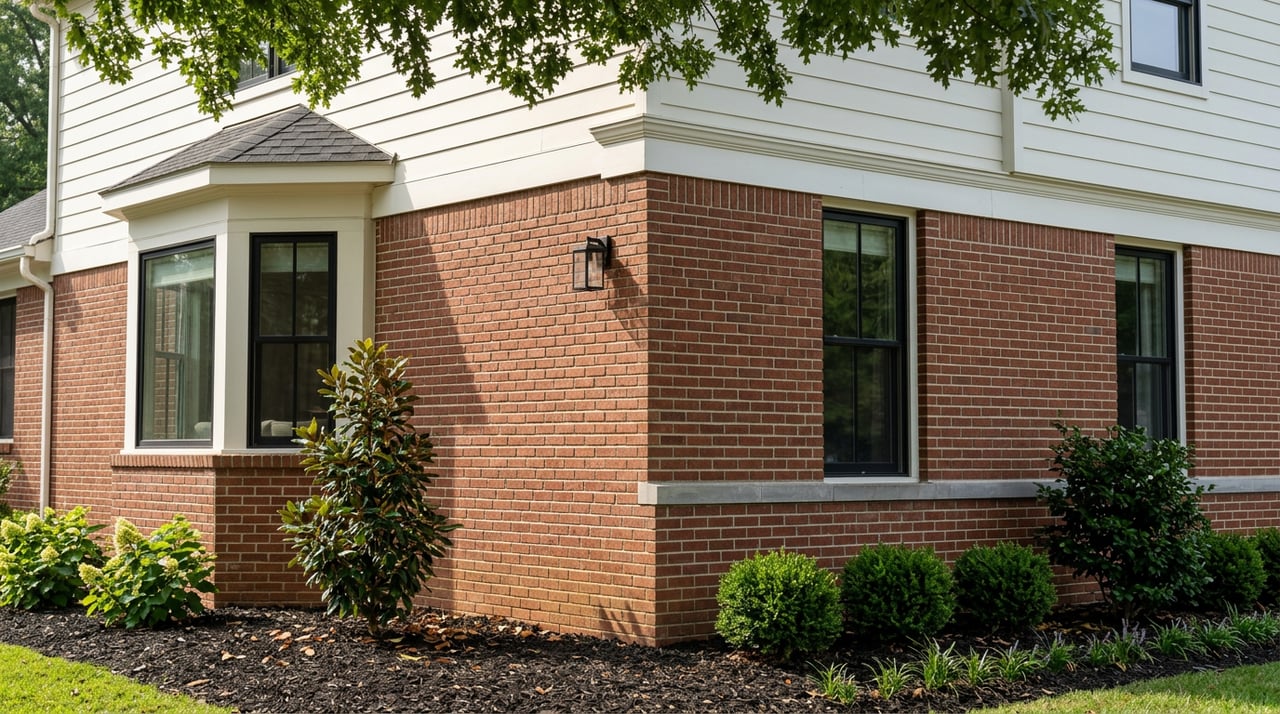
How Cart Path Access Shapes Peachtree City Home Value
Two homes come up on the same search. Similar square footage. Same school zone. One is listed at $585,000 and pending in nine days. The other has been on the market for seventy-one and just took a price cut. On the map they look like neighbors. In the way Peachtree City actually prices, they are not in the same market at all.
The variable that separates them is not staging or interest rates. It is where the cart path runs.
Before you write an offer on anything just outside the city limits, know this: if you live outside Peachtree City and want to use the 100-plus mile shared-use path network, you pay a $235 annual path user fee on top of the $15 cart registration. That $250 per year is a permanent tax on the address you chose, and it changes the math on "close to Peachtree City" listings in a way most portals will never show you.
The headline data looks calm. Zillow's May 2026 index put the typical Peachtree City home value at $587,755, down about 0.6% year over year. Movoto pegged the March 2026 median sale at $624,999. Orchard's rolling thirty-day read landed at $598,500, up 3.2% year over year. Pick your source and you get a market that is drifting sideways.
Then look at how long it takes to sell one.
Movoto reported average days on market at 52 in March 2026, up from 27 a year earlier. Redfin's February 2026 snapshot showed 65 days, up from 38. Orchard's data showed only 6.06% of homes closing above list price, a 13.9-point drop year over year, while 27.27% of listings had at least one price cut.
Prices flat. Time-on-market roughly doubled. Above-list sales collapsed.
That combination has one honest interpretation: the median is being held up by the homes buyers still fight over, while everything else sits. In a market like this, "median price" tells you almost nothing about what your dollar will actually buy. Cart-path position is doing the sorting.
Every listing in Fayette County will use some version of the phrase "close to cart paths." That language obscures a real hierarchy that shows up in offer counts and closing prices.
| Tier | What the buyer gets | What the listing usually says |
|---|---|---|
| Direct frontage | Path runs along the lot line. Roll off the driveway onto it. | "Cart path access" or "direct path access" |
| Neighborhood connector | A short residential street or shared drive reaches the path within a block. | "Steps to cart paths" |
| Path-adjacent | Path is within the subdivision, but crossing requires a stretch of surface street. | "Minutes to path system" |
| Off-path | Nearest path connection requires a car trip. | "Near Peachtree City amenities" |
Buyers who move here specifically for the lifestyle read those categories fluently. They will pay a premium for the first tier and often walk away from the fourth, regardless of finish quality inside the home. That is the mechanism a flat median hides.
Features that stack on top of cart-path tier tend to compound rather than add: direct path plus a short cart ride to Lake Peachtree, Drake Field, or a village center. Direct path plus a golf-course lot at Flat Creek or Braelinn Golf Club. Direct path plus a McIntosh or Starr's Mill attendance line inside the Fayette County R-1 district.
Peachtree City is a planned community divided into five villages, each with its own housing stock and cart-path density: Kedron in the north, Aberdeen and Glenloch in the middle, Braelinn in the south, and the newer Wilksmoor on the west side. A buyer who searches "Peachtree City under $650K" without filtering by village is comparing apples to five different apples.
Glenloch, one of the original villages, tends toward mature landscaping and established homes where path connectivity was baked in from the start. Aberdeen concentrates golf-course frontage. Braelinn wraps around the Braelinn Golf Club and pulls buyers who want the southern school zones. Kedron leans toward newer inventory and pulls families targeting McIntosh. Wilksmoor is where infill and newer construction show up.
The practical translation for a buyer: identical floor plans in Kedron and Braelinn are not interchangeable, and a comp set that treats them as such will mislead an offer by tens of thousands.
In June 2026 the city posted a construction notice for a new shared-use path along North Peachtree Parkway near the North Hill subdivision, with lane impacts running between Loring Lane and Tinsley Mill Road. This is not a maintenance item. It is a boundary change.
Homes that were "path-adjacent" on the old map become "direct frontage" the day that ribbon of asphalt is finished. The city's own 2017 SPLOST program earmarked seventeen path improvement projects at more than $4.9 million in total, and each completion resets which lots sit in which tier. A comp set pulled six months ago may already be reading the wrong side of a boundary.
For a buyer under contract in a corridor with active path work, this cuts two ways. If your target home is about to become directly path-connected, an appraisal built on closed comps from before the ribbon-cutting will understate value. If you are buying a home whose "path access" claim depended on an under-construction connector, the closing timeline matters more than usual.
The RE/MAX Concierge market brief on Peachtree City puts the CMA discipline plainly: stay within a half mile to a mile, match the school zone, use closed sales from the last three to six months, and adjust for cart-path proximity and lot type as separate line items rather than folding them into a single "location" bucket.
A few practical constraints follow from the 2026 data.
The reason online valuation tools miss so badly here is that the two variables that matter most, path tier and village, are not fields those models weight correctly. A Zestimate that averages $587,755 across the city is arithmetically true and functionally useless when the spread between tier one and tier four inside a single village can exceed 15 percent.
One more piece of 2026 context matters. Coverage in The Citizen in March 2026 confirmed that speculation about Peachtree City annexing land west into Coweta County is not going to happen, with Mayor Kim Learnard, Coweta County Commissioner John Reidelbach, and Sharpsburg Mayor Elizabeth Good all stating publicly that state law and local politics close that door. The growth boundary the founders drew is effectively fixed.
Fixed geography plus a fixed path network plus a school district with defined attendance zones equals a supply picture that will not loosen structurally. That is why days-on-market can double while prices barely move: buyers are still there, they are just refusing to overpay for the wrong tier when they know the right tier is scarce by design.
Does the non-resident path fee apply if I buy in unincorporated Fayette County near the city line? Yes. Under the current ordinance, cart owners who live outside Peachtree City limits and do not pay city property taxes pay a $15 annual registration plus a $235 path user fee, totaling $250 per year. New decal placement rules and a shifted 2026 renewal schedule are posted on the city's Paths and Motorized Carts page.
Are cart paths counted in appraisals? Not as a line item. Appraisers work from paired sales, so the premium shows up only when the comp set includes homes with and without similar path tiers. If your appraiser pulls comps outside the village or across path tiers without adjusting, ask for a revision with matched comps before accepting the value.
Is now a buying or selling window? As of mid-2026, path-connected homes in strong school zones are still moving in weeks at close to list, while tier-three and tier-four inventory is stretching past sixty days and taking cuts. If you are selling in the first group, timing is on your side. If you are buying in the second, you have room to negotiate that you did not have twelve months ago.
The portals will keep publishing one median price for a city that has at least twenty. If you are planning a purchase or a sale in Peachtree City in the next few months, the work worth doing before you write or accept an offer is unglamorous: identify the exact path tier of the address, confirm the village and the attendance zone, and price against comps that share both. That is the level of detail this market rewards in 2026.
True Atlanta Real Estate works this ground for buyers and sellers across the south-metro suburbs, including Peachtree City, Fayetteville, and the Fayette County corridor. Schedule your free consultation and we will build the comp set the way this city actually prices.

I listen to your needs and utilize the best information and market data to guide, inform and equip you with the best negotiation position. From the first phone consultation, I will listen intently and ask appropriate questions to ensure I understand your expectations throughout the process.