How Peachtree City’s Golf Cart Lifestyle Really Works
Ever wonder whether Peachtree City’s golf cart lifestyle is just a fun perk or something that truly shapes daily life? If you are thinking about buying a home here, that question matters more than you might think. The golf cart network is woven into how many residents move around the city, and understanding how it works can help you choose a home that fits your routine, storage needs, and long-term goals. Let’s dive in.
In Peachtree City, golf carts are not simply a weekend novelty. They are part of the city’s identity and daily function.
The reason goes back to the city’s origins as a planned community. According to the City of Peachtree City history page, the community was designed around villages, each with shopping, recreation, and elementary schools nearby. Today, those villages include Aberdeen, Braelinn, Glenloch, Kedron, and Wilksmoor.
That layout helps explain why golf carts became so practical. Instead of serving just a golf course or a gated area, carts became useful for everyday trips across a community built to connect neighborhoods with common destinations.
One of the biggest reasons the golf cart lifestyle works in Peachtree City is the city’s extensive path network. The city describes it as a 100+ mile multi-use path system that links neighborhoods with retail shopping centers, medical and office parks, schools, recreation centers, places of worship, and lakes.
That means your golf cart can be more than a recreational extra. Depending on where you live, it may become part of your normal routine for errands, outings, and local trips.
The system is shared, not exclusive to carts. Peachtree City’s FAQ on the path system says the community has over 10,000 golf carts, but the paths are also used by walkers, joggers, and cyclists. In other words, this is a public mobility network that supports several types of users at once.
Not every home offers the same cart experience. This is one of the most important things buyers should understand.
Peachtree City maintains 36 bridges and 29 tunnels within the path system. That infrastructure helps people cross major roads and waterways, but it also means route convenience can vary from one neighborhood to the next.
A home that looks close to shopping or parks on a map may still involve a less direct ride if your route depends on a specific bridge, tunnel, or crossing. The city also notes that State Highways 54 and 74 run through the area, which can shape how straightforward a route feels in practice, as shown on the city’s transportation page.
Before you buy, it helps to look beyond straight-line distance. Tools like the city’s interactive GIS map and NavigatePTC app, both referenced in the city’s path system FAQ, can help you understand how a route may work day to day.
If the golf cart lifestyle is part of your vision for living in Peachtree City, it is smart to evaluate each property with that in mind. A home may be in the right city, but that does not automatically mean it is the right fit for cart-based living.
Here are a few practical questions to ask:
These questions can reveal a lot about how convenient the lifestyle will actually feel once you move in.
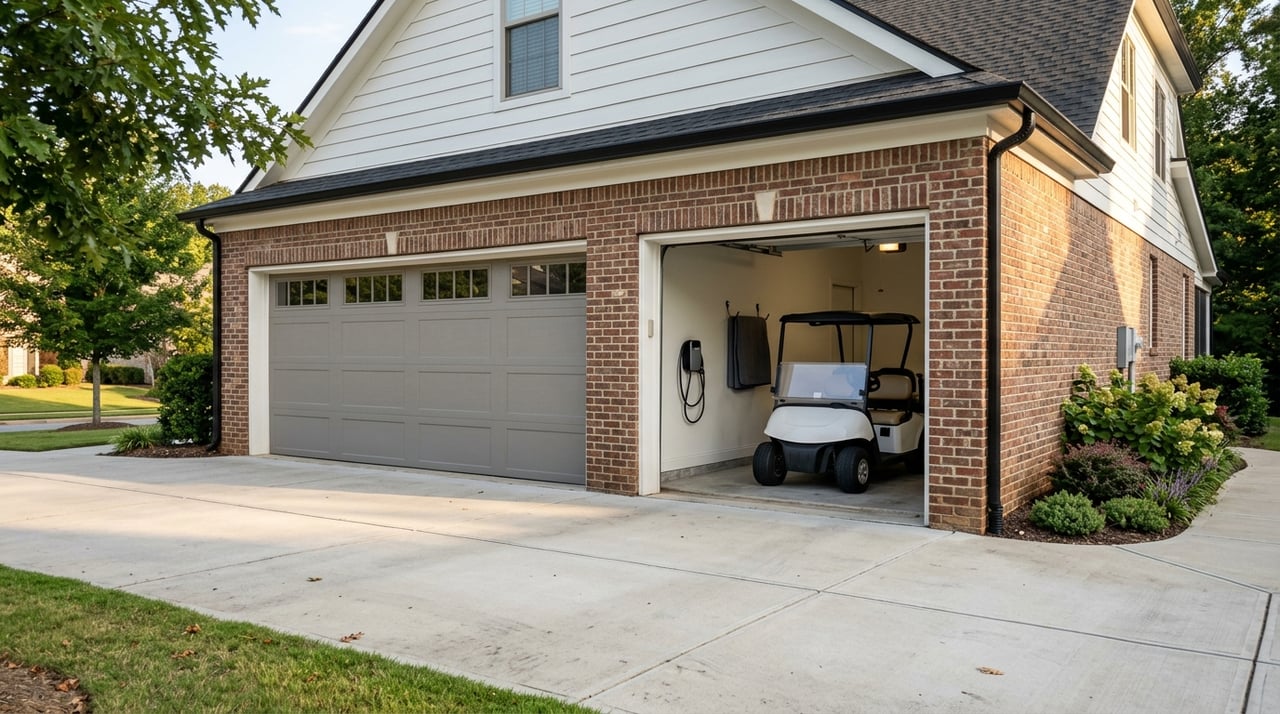
Golf cart ownership also affects how you use your property. That makes storage an important part of your home search.
The city’s general FAQ states that cars, trucks, motorcycles, golf carts, and similar vehicles cannot be parked on unpaved surfaces such as grass, pine straw, or mulch. For buyers, that makes garage space, paved parking, and driveway layout especially important.
If a home has limited garage depth or a tight driveway setup, storing a cart comfortably may be harder than expected. This is worth reviewing early, especially if you already own a cart or plan to buy one soon after closing.
If you plan to own a golf cart in Peachtree City, you will need to understand the city’s registration rules. These are not minor details, and they should be part of your move planning.
According to the city’s Paths and Golf Carts page, new carts must be registered within 10 days of purchase, and registration is limited to owners age 18 or older. The city also requires owners to report changes in ownership or contact information within the required timelines.
As of 2026, resident renewals follow a three-year cycle totaling $45. Non-residents pay $15 annually plus a $235 path user fee. If you are considering a home near Peachtree City but outside city limits, that difference can affect your costs.
The city also updated decal rules in October 2025. Registration decals must now appear on both the front and rear of the cart, and they must be unobstructed and clearly visible. If you are buying a used or customized cart, that is a detail worth confirming.
Many buyers use the terms interchangeably, but Peachtree City does not treat golf carts and low-speed vehicles the same way. Knowing the difference can help you avoid confusion.
The city explains on its Paths and Golf Carts page that low-speed vehicles, or LSVs, must be tagged through the Fayette County Tag Office. They may only be driven by licensed drivers and also require an amber strobe light from the Georgia Department of Driver Safety.
If you are comparing a traditional golf cart with an LSV, make sure you understand which rules apply. The right option depends on how you plan to use the vehicle and what level of road access you expect.
One reason Peachtree City’s cart culture works is that it is supported by shared expectations. The path system is active, busy, and used by many people, so etiquette matters.
City reminders posted through the multi-use path notices tell users to keep right and pass left, give pedestrians the right-of-way, use an audible warning when approaching pedestrians from behind, and avoid racing, blocking public access, or lingering on bridges and in underpasses. The city also reminds users to place trash in designated receptacles, with fines that can double for littering on the paths.
The city’s Multi-Use Path Golf Cart Safety Program reinforces that this is a managed and safety-focused system. For buyers, that is a positive sign that the lifestyle is supported by city oversight, not just local habit.
The biggest takeaway is simple: in Peachtree City, the golf cart lifestyle is tied to property fit. Two homes may both have the same mailing address, but they can offer very different day-to-day convenience when it comes to paths, storage, and access.
That is why a home search here should include more than bedrooms, square footage, and price. You also want to understand how the property connects to the city’s transportation network and whether that setup matches how you want to live.
If you are exploring homes in Peachtree City, working with an agent who can help you think through location, access, and practical tradeoffs can make the process much easier. When you are ready to talk through your options, connect with Cyndi Williams for thoughtful, local guidance.



I listen to your needs and utilize the best information and market data to guide, inform and equip you with the best negotiation position. From the first phone consultation, I will listen intently and ask appropriate questions to ensure I understand your expectations throughout the process.