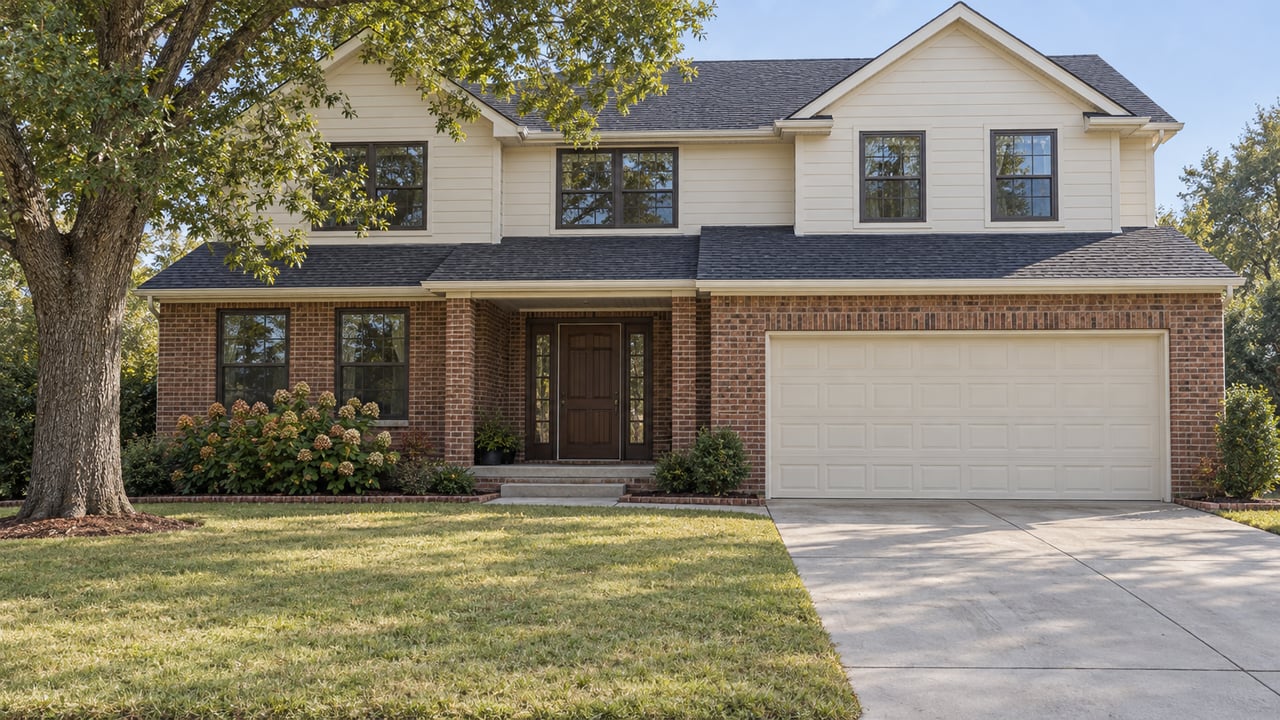
Why The Seller's Tax Bill Won't Be Yours In McDonough
The tax figure on a McDonough listing is a number the seller earned by staying in the home, and none of it comes with the deed. Henry County's frozen homestead exemption, the city's choice to stay in Georgia's newer floating exemption, and the way Georgia closings split taxes all start from the seller's bill. At the closing table that figure looks like a fact about the house. In practice it reflects one owner's history with the house, and the first full bill a new owner receives can be calculated on a different basis.
This matters most when you're comparing McDonough with other suburbs on monthly payment. A home that has had the same owner for many years can look cheaper to carry than a similar house down the street, and part of that gap goes away when ownership changes.
A Henry County property tax bill isn't one tax. It's several, and since 2025 each major piece has followed its own rules about what happens at a sale.
| Layer of the bill | What protects the current owner | What happens when the home sells |
|---|---|---|
| County and Water Authority | Henry County's frozen homestead exemption, enacted by local legislation in 2004 | Applies only while the owner occupies the home as a primary residence, so it doesn't pass to the buyer |
| Henry County Schools | No freeze. The school board opted out of HB 581 | Already based on current value, plus age-based exemptions for qualifying owners |
| City of McDonough | HB 581 floating exemption, which the council voted to keep | Personal to the owner. A new owner starts a new base year |
The county layer goes back the furthest, and for a buyer it has the most effect.
At the Henry County Board of Commissioners meeting on August 17, 2026, Tax Commissioner Michael Harris explained the county's frozen homestead exemption, according to the meeting minutes. Local legislation created it in 2004. It covers a qualifying primary residence and up to five contiguous acres. The base-year value is generally the home's fair market value from the year before the owner filed for homestead. The exemption renews automatically as long as the owner keeps living there, and the owner pays the County and Water Authority portions of the bill on that base-year value even if the home's market value rises.
Harris estimated that the freeze currently gives Henry County residents about $50 million a year in tax benefit.
That $50 million is spread across current owners, and each one's share depends on when they filed. An owner who filed homestead long ago is paying county taxes on a value from that filing year. When the home sells, the new owner files for homestead, and the base year generally becomes the year before their own filing. The protection is real for the person who holds it, and it ends when that person moves out.
The freeze also works in reverse. If a home's value falls below the base year, taxes are calculated on the lower value. Harris used this case in August 2026, noting that some property values have decreased. His example was a homesteaded home worth $280,000, assessed at $112,000, with a taxable value of $97,000 after the standard exemption and about $1,529.98 in County taxes.
The same presentation included a worked example at the County's 2026–27 rate of 15.733 mills, meaning $15.733 per $1,000 of assessed value. Assessed value in Henry County is generally 40% of fair market value.
That's a difference of about $236 a year on the County portion from the standard exemption alone, before the freeze has any effect.
There's a second gap to keep in mind. Homestead is filed by the owner. The seller's bill reflects their filing status, the base year from their filing, and any age-based or other exemptions they qualified for. A buyer's first bill reflects the buyer's own status. If the buyer hasn't yet filed homestead, or the home was bought as a second property, the bill is figured without those exemptions.
When the Henry County school board opted out of HB 581 by a 5–0 vote on February 10, 2025, the Henry Reporter noted that the school system receives about 60% of property tax revenue in Henry County. The opt-out kept the status quo. The county government already had its own freeze on the commissioners' portion of the bill, and the school portion stayed tied to current value.
The district's stated reason, per the same report, was that the exemption's year-over-year compounding would limit its ability to operate. It estimated reductions in forecasted additional revenue of $3.4 million in 2025, $7 million in 2026, and $11 million in 2027. The Georgia Secretary of State's HB 581 opt-out list shows the Henry County Board of Education's opt-out as received on February 19, 2025.
For a buyer, this means the largest share of a typical bill doesn't depend on who owned the house before. School taxes follow current value, adjusted for whatever exemptions the owner qualifies for. Henry County offers age-based exemptions that apply only to school taxes, starting at ages 62, 65, 68 and 70, along with exemptions for qualifying disabled taxpayers, disabled veterans and surviving spouses. If the seller qualified for one of these and the buyer doesn't, the school line on the seller's bill can be much lower than the buyer's will be.
The school rate is also still in play this year. In summer 2026, Henry County Schools publicly proposed a 20.000-mill rate, 0.205 mills above the rollback rate of 19.795. The district's notice put the increase at $25.83 for a home with a $325,000 fair market value. The research for this post did not confirm the final adopted rate.
The City of McDonough added a newer protection. In February 2025 the council voted 5–0 to remain in HB 581, the Henry Reporter reported, so eligible homesteads inside city limits can receive the statewide floating exemption on the city portion of the bill.
This exemption also belongs to the owner. Under the text of HB 581, it doesn't transfer to a later owner except a qualifying surviving spouse. For a new applicant, the base-year value is generally the home's assessed value from the taxable year just before the exemption is first granted to them. Georgia Title & Escrow's explainer says the cap resets when the property sells or transfers, and that it follows the qualifying homestead occupancy, not the parcel.
The county government's position on HB 581 isn't fully settled in the public record. Henry County's government doesn't appear on the Secretary of State's opt-out list. Because HB 581 applies unless a government opts out, the county appears to have stayed in by default. This post's research found no county resolution confirming that. These choices can also change. HB 92, effective April 1, 2025, set up annual opt-out and opt-in windows through 2029.
The closing is where these layers turn into a real cost.
Georgia closings usually prorate property taxes. The seller pays for the part of the year they owned the home, and the buyer pays for the rest. A home that closes in spring or summer closes before that year's bill exists. A Georgia closing law firm, Sherman & Phalen, describes the usual approach. The seller's share, from January 1 through the closing date, is estimated from the previous year's bill and credited to the buyer, and the actual bill later goes to the new owner.
In Henry County, the previous year's bill is the seller's bill, with the seller's freeze, homestead status and any senior school exemption built in. The credit at closing is sized to that number. The bill that arrives later goes to the buyer.
Here's how the year plays out under the county's own calendar:
The Georgia REALTORS purchase agreement addresses this gap. According to a Georgia REALTORS forms training packet, taxes are prorated as of closing. When the proration was based on an estimated bill, or a bill under appeal, the buyer and seller are to promptly adjust between themselves once the actual bill is issued or the appeal is resolved. That adjustment settles the current year's split. It doesn't change the basis for the next year, when the buyer's bill is calculated entirely on the buyer's own exemptions and base years.
Does filing homestead right away bring back the seller's frozen value? No. Under the county's rules, the base-year value is generally the fair market value from the year before the new owner files, so a new filing creates a new base year. Filing still matters for the standard $15,000 County exemption and for any freeze going forward.
Is the freeze the same for every part of the bill? No. The 2004 county freeze covers the County and Water Authority portions. The school portion, roughly 60% of revenue, isn't frozen because the school board opted out of HB 581. Inside McDonough city limits, the city portion falls under HB 581.
Could these rules be different next year? The HB 581 elections can be. HB 92 allows annual opt-in and opt-out decisions through 2029, so current status is something to confirm with the Henry County Tax Commissioner's office each year.
If you're comparing McDonough homes and want to know what the tax line on a listing reflects, Cyndi Williams can go through each layer of that bill with you before you make an offer, so your payment estimate starts from the right basis. Schedule your free consultation.
This article is general information, not legal, tax or financial advice. Consult a qualified professional about your situation.




I listen to your needs and utilize the best information and market data to guide, inform and equip you with the best negotiation position. From the first phone consultation, I will listen intently and ask appropriate questions to ensure I understand your expectations throughout the process.